Casa
2026-10-10
BackOur house has nineteen lights a computer can switch, a TV, a robot vacuum called Eva, three cameras and five Wi-Fi points, and one person who understands how they fit together. That person is me. On October 5 the TV's play button broke three different ways in a single day, and every fix needed me.
This is an old problem. In the summer of 2010 a Microsoft Research team visited fourteen automated homes. Nine were run by their owners, and each depended on what the paper calls the technology guru. In a tenth the guru had died, and his family used the system every day but were "unsure what they would do if anything broke." The rest relied on paid professionals, and those systems were "static and unchanging." One resident: "I don't like that we can't fix it ourselves." In another of those homes visitors looked at the control panel in dread, and a resident said "my own mother sat in our house in the dark," too scared to touch it.
Neither model worked: the hobbyist who is the only one who can fix it, or the installer who leaves behind something nobody can change. What I think should exist is a third thing, a person whose job is making one house's smart home at a time. They install it on standard parts. They build the household its own interface, made of its floor plan, its names and only its devices. They hand over the source, and they come back when the family changes.
The app for every house
Apple, Google and Amazon have to ship one app that works in a studio apartment and in a farmhouse, so the house becomes a list: rooms, and in each room a grid of devices. When Google began rebuilding its Home app in 2022, it said the old one dated from when users had fewer than three devices, that the average US household now had 25 connected devices, and that "there was no one size fits all model to organize the home." Its answer was more ways to arrange the same list.
Home Assistant, the open platform under our house, is blunter. In November 2024 its roadmap said the default dashboard "simply dumps every single entity that a home has onto one page," and set a goal it calls the Home Approval Factor: getting the rest of the household to use the thing. A much better default arrived this year. It is still one design for every home, because a default has to be.
What one house looks like
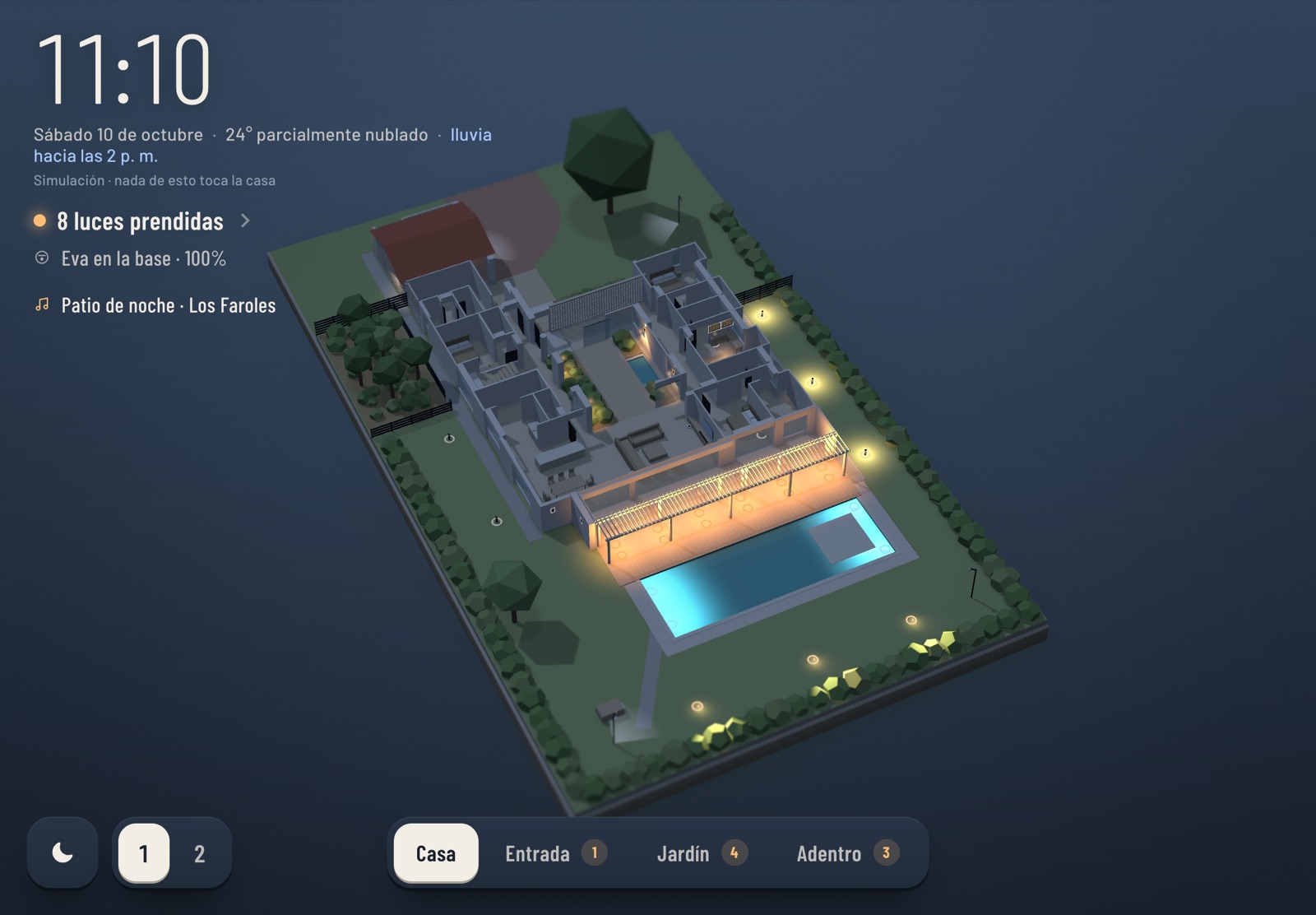
Casa is the screen on an iPad on a stand in our kitchen. The house is the interface: a small board of the real floor plan, every light standing where its fitting is, and you tap the light. The lamp on my parents' nightstand is called Lámpara de papás, because that is what we call it, and it sits on the board where their bed is. The whole thing is in Spanish. There is no store, no feed, and nothing for a device we do not own.
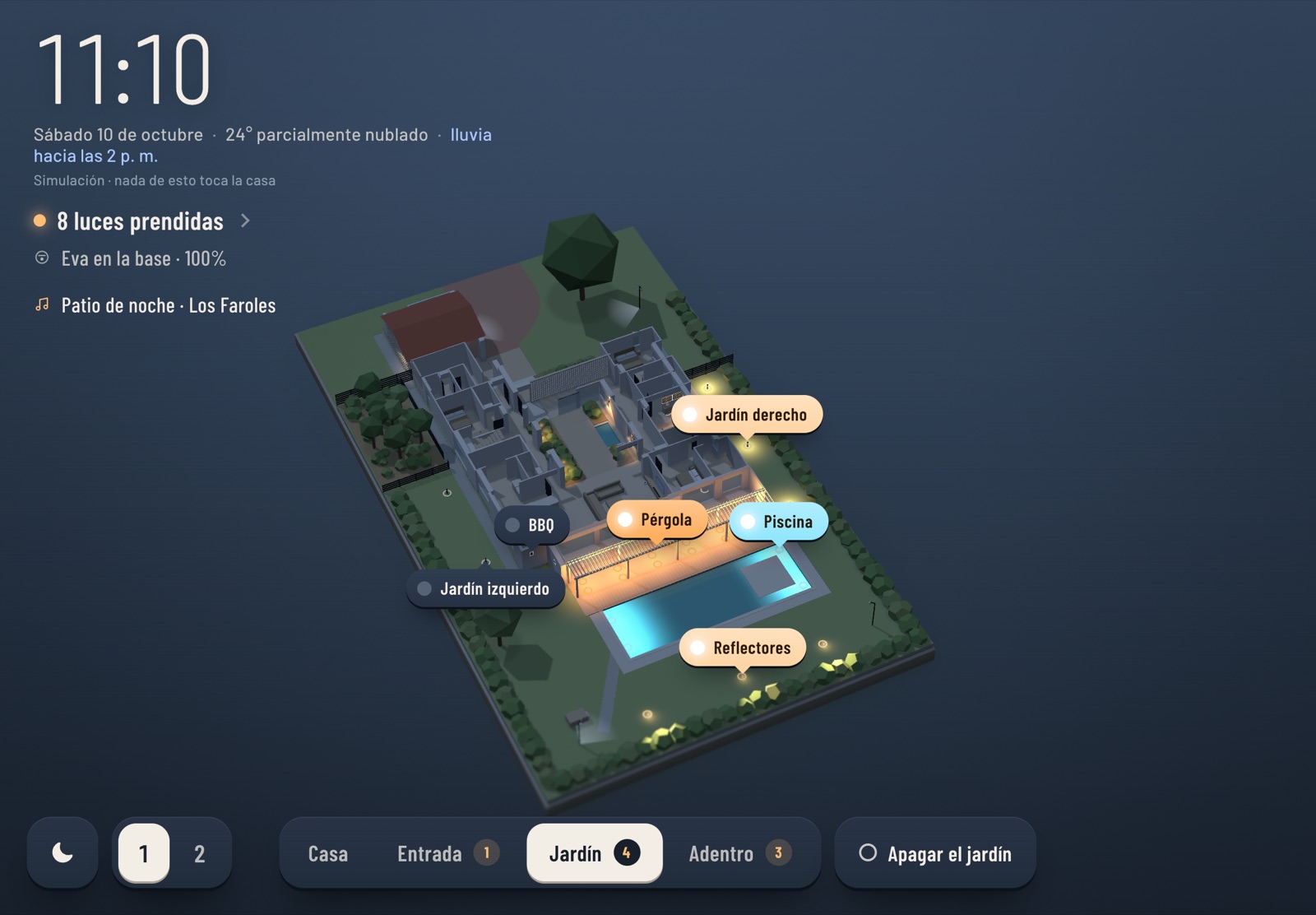
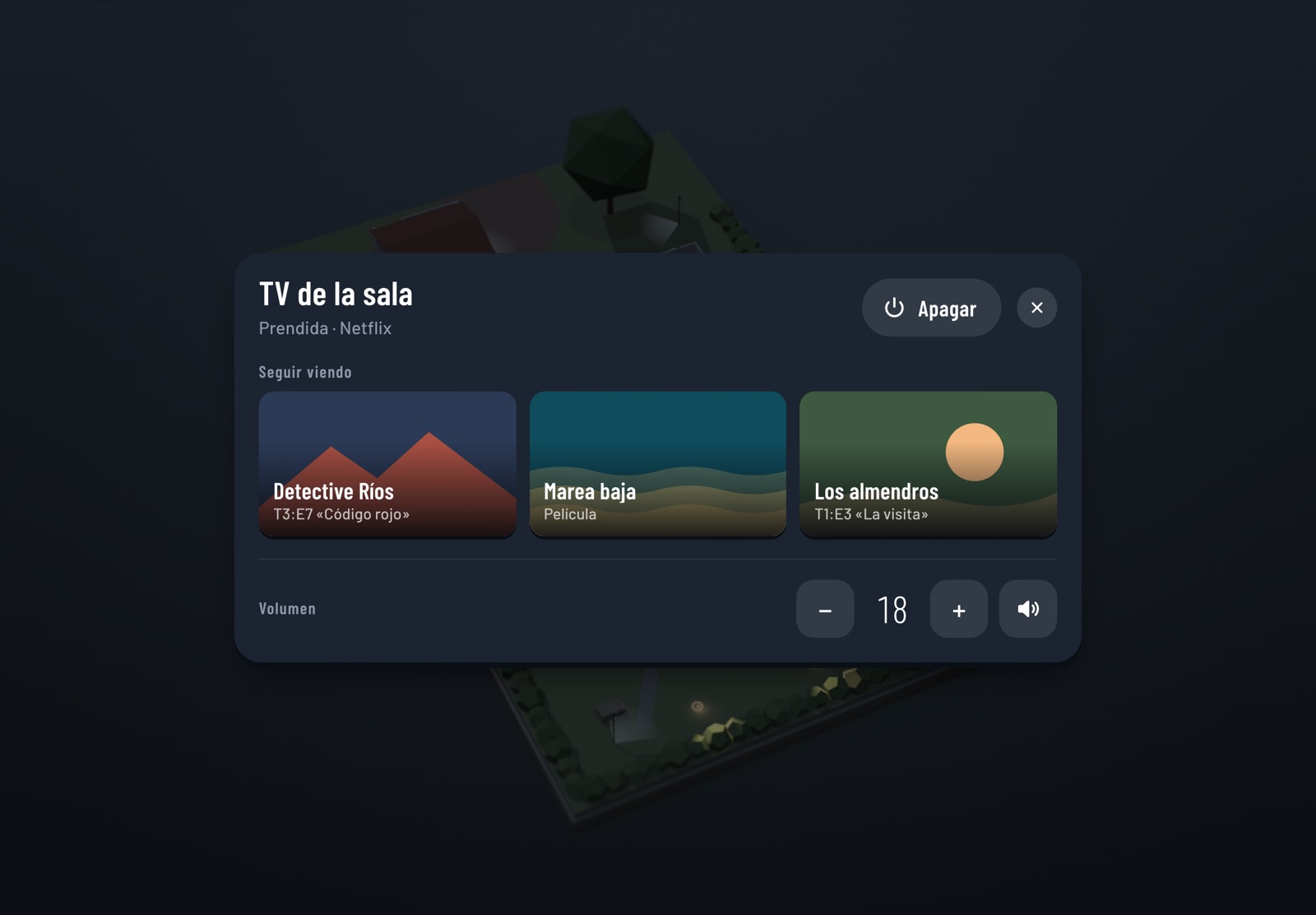
The TV card holds our own Continue Watching row, the volume and the power, and nothing else the TV can do. The cameras open from where they hang on the board. The house splits into three areas, Entrada, Jardín and Adentro, and a tap on one flies the board there. None of it would make sense in anyone else's house, which is the point.
The idea of the house as the interface is not mine. In 2009 Savant shipped TrueImage, where you tapped the lamp in a photograph of your own room. It needed a photographer to shoot every room in every state, and the moment a family redecorated, the interface "would immediately no longer represent the room." That is the honest cost of anything made for one house. It goes stale when the house changes, so someone has to keep it current.
Who would do it
The trade that installs smart homes already exists. CEDIA, its association, counts about 20,000 integrators in a $29 billion US market, with a median job of $15,000. The 2010 study shows what it tends to leave behind: systems that work and do not change. Integrators close, too: one Bay Area integrator counts fewer than one in ten of the firms he competed with in 2000 still in business, and when a Control4 dealer goes, Control4's own help page warns the owner will have no support or maintenance until another certified dealer takes over.
Two things are different now. The device layer is becoming shared: Matter standardises how devices talk to a controller and says nothing about the interface, and Home Assistant runs in two million homes. A house built on those is not tied to one integrator. And the part Savant once needed a photographer for has become cheap. I made Casa in about ten days with an AI coding agent. I write software for a living, so that proves less than it sounds, but it is days, not a product cycle. The industry is pointing its AI at configuring the same systems faster. The opening is in the part those systems leave out.
Who keeps it running
This is where the argument is weakest. An electrician can take over another electrician's wiring because there are codes and standard parts. There is no code for a one-off interface, and code an AI wrote, in a house full of cameras, needs someone who reads it. A service contract only helps if the next integrator can understand what the last one built, and that is the same handover the incumbents already fail.
I do not have a full answer. The best I have is to keep the custom part thin. Everything that talks to devices stays standard, so any integrator can take it over, and the interface on top is small enough that losing it means losing a nicer screen, not the house. Ours works that way: if Casa stopped tomorrow, the wall switches, the TV's own remote and Home Assistant's app would all still work. It is also not for every home. Plenty of owners are content with what they have, and Deloitte found only one in five frustrated.
The best moment in that 2010 study is a small one. The family whose visitors dreaded the panel had a second child, and they had their consultant come back to add a switch by their bed for the lights in the new child's room. That is the job I mean: knowing a house, and coming back when it changes, for the screen as much as for the switches.
CC BY-NC 4.0 © ma-r-s
?